 Richter Group
Are Poles a romantic nation? Premiere of Gedeon Richter’s latest report, “The Anatomy of Relationships: Face-to-Face Connections”
13/02/2026


13/02/2026
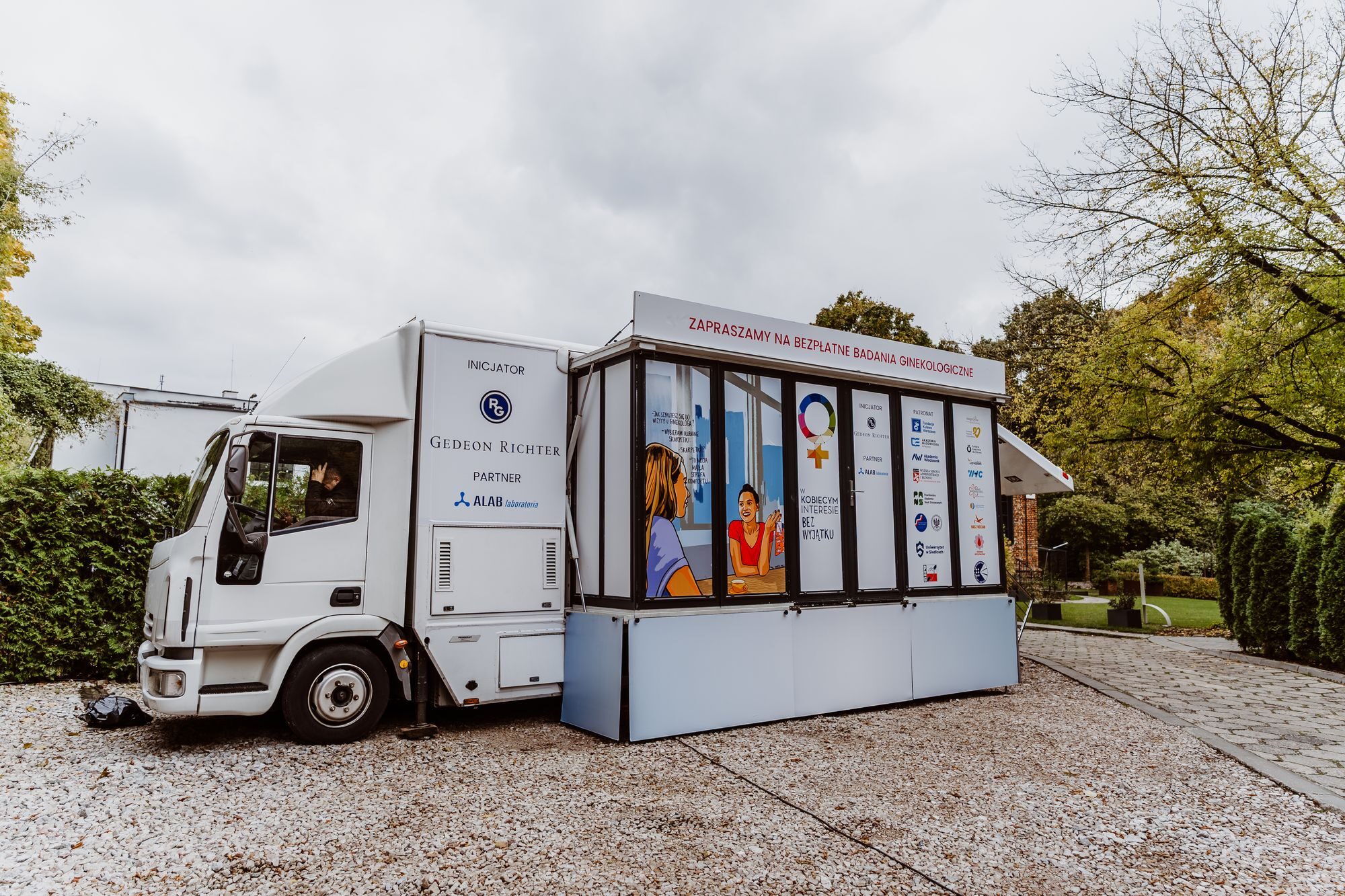
One in five Polish women aged 18–29 has never visited a gynaecologist, and 67% of young women experience negative emotions associated with such an appointment. It is for these women that, as part of the Gedeon Richter Polska initiative “In Women’s Interest”, a mobile gynaecology clinic set off across Poland for the seventh time. This year, the clinic visited smaller university towns.
Women’s health is a core value for Gedeon Richter. We focus on the health-related needs of women in order to provide them with genuine, meaningful support. Our research shows that there are many areas in which support is still needed. That is why, each year, the “In Women’s Interest” project focuses on a different, clearly defined issue and follows a distinct overarching theme. Previous editions addressed social challenges, such as limited access to gynaecological care for women with disabilities and those living in smaller towns; psychological barriers related to seeing a specialist; avoiding appointments due to the pandemic or older age; and taboos surrounding conversations about intimate health.
This year’s edition focuses on the needs of neuroatypical women and those who experience sensory or emotional challenges in their everyday lives, which can affect both the quality and the experience of a medical visit. All this is captured in the campaign’s guiding message: “Without Exception”. What we want to highlight today is that a patient’s experience is shaped not only by the doctor or midwife but also by other factors that influence how the patient feels when leaving the consulting room. Women can clearly communicate their needs, both in their interactions with the doctor and in terms of preferences arising from their sensitivities, such as tactile sensitivity.
“In every edition of our campaign, we draw attention to barriers to women’s preventive healthcare that often go unnoticed. We want every woman to have access to examinations that are free from barriers of any kind. Each year, we break down further walls, challenge stereotypes and raise awareness that women’s health is also truly in their own hands. I am proud that, in this way, we can fulfil our mission”, says Aneta Grzegorzewska, Director of Corporate and External Relations at Gedeon Richter Polska.
This year, in all seven locations, the initiative was supported by ALAB Laboratories, a nationwide network of diagnostic laboratories that helps care for the health of people across Poland through laboratory testing. Thanks to this partnership, patients who visited the mobile gynaecology clinic were, following a medical consultation, able to undergo free liquid-based cytology and an HPV test. In addition, the doctor conducted a thorough medical interview and performed a gynaecological ultrasound scan, as well as a manual breast examination. As in previous years, the mobile gynaecology clinic was also fully adapted for people with disabilities.
At Gedeon Richter, we understand that health goes beyond effective therapies, which is why we listen closely to patients’ voices and experiences in order to offer real support. The impulse for this year’s edition of the campaign came from the results of a study conducted in August 2025 among women aged 18–29. The study examined how young women in Poland care for their intimate health, what emotions surface during visits to a gynaecologist and the extent to which neuroatypicality and sensory sensitivity affect their experiences.
The findings are concerning. One in five young Polish women has never visited a gynaecologist, and 67% report negative emotions associated with such visits. One of the reasons for this is the feeling that their gynaecological concerns have been dismissed – an experience reported by as many as 58% of respondents. This is partly linked to the current healthcare model in Poland, where a standard fifteen-minute appointment does not allow doctors to devote sufficient time to each patient.
How could this situation be improved? Women who have already visited a gynaecologist most often point to improving their physical and psychological comfort (40%), experiencing an empathetic and non-judgemental approach from the doctor (39%) and receiving clear, reliable information about their health (43%). These factors also encourage open conversations with doctors about topics such as contraception. As the report shows, the vast majority of women recognise the role of contraception in family planning (84%) and feel a strong need to expand their knowledge in this important area (68%).
Why does this year’s campaign focus on neurodiverse women? This is because the data show that they make up a growing group among female students and other young women, and this trend is expected to continue.
Neurodiverse individuals often display heightened sensitivity, which can create challenges, including in the area of gynaecological prevention. According to the report, as many as 41% of women who identify as or have been diagnosed as neuroatypical avoid or postpone visits to a gynaecologist. The issues they report more frequently than others include sensory overload and unfriendly behaviour from reception staff.
As women’s needs in relation to gynaecological visits are wide-ranging, this year’s Gedeon Richter campaign was designed to address them as comprehensively as possible. In the mobile clinic, priority is given to an empathetic and supportive approach from medical staff, and to patients’ physical and psychological comfort. The consulting rooms are also equipped with elements designed to reduce stress and support the nervous system by minimising sensory stimuli.
It is worth remembering that a patient’s comfort depends not only on how the consulting room is prepared but also on how she prepares for the visit and her mindset. By sharing her needs with the doctor in advance, including sensory preferences related to the examination itself, the visit can take place in a supportive atmosphere, allowing the woman to gain much more from the experience.
“In fact, solutions of this kind can be implemented to varying degrees by any facility offering gynaecological care. It is worth paying attention to how staff communicate with patients, both in person and remotely, as well as to lighting, noise levels and whether the environment supports a sense of comfort and privacy. Designing spaces and services with diverse patients in mind leads to a better experience for EVERYONE; this is precisely what inclusivity means”, says Dr Zofia Małkowicz, sociologist and patient experience researcher.
This year, the Mobile Gynaecology Clinic visited seven locations: 9 October – Płock, 10 October – Włocławek, 11 October – Gdynia, 13 October – Kwidzyn, 14 October – Ciechanów, 15 October – Łomża and 16 October – Siedlce.
More information and the full research report are available at: zdrowa-ona.pl
Campaign partners:
Kulawa Warszawa Foundation, Avalon Foundation, Polish Association of the Blind, Polish Association of the Deaf, Institute of Patient Rights and Health Education, the nationwide organisation “Flower of Femininity” (Kwiat Kobiecości), the Magnolia Association of Women with Oncological and Gynaecological Conditions, Creatively for Health Foundation, Watch Health Care, Defeat Endometriosis Foundation, Różowa Skrzyneczka Foundation and the Nasz Bocian Association. The supporting media patron of the campaign is the “Zdrowa Ona” portal.
13/02/2026
13/02/2026
13/02/2026