 Richter Group
Are Poles a romantic nation? Premiere of Gedeon Richter’s latest report, “The Anatomy of Relationships: Face-to-Face Connections”
13/02/2026


13/02/2026
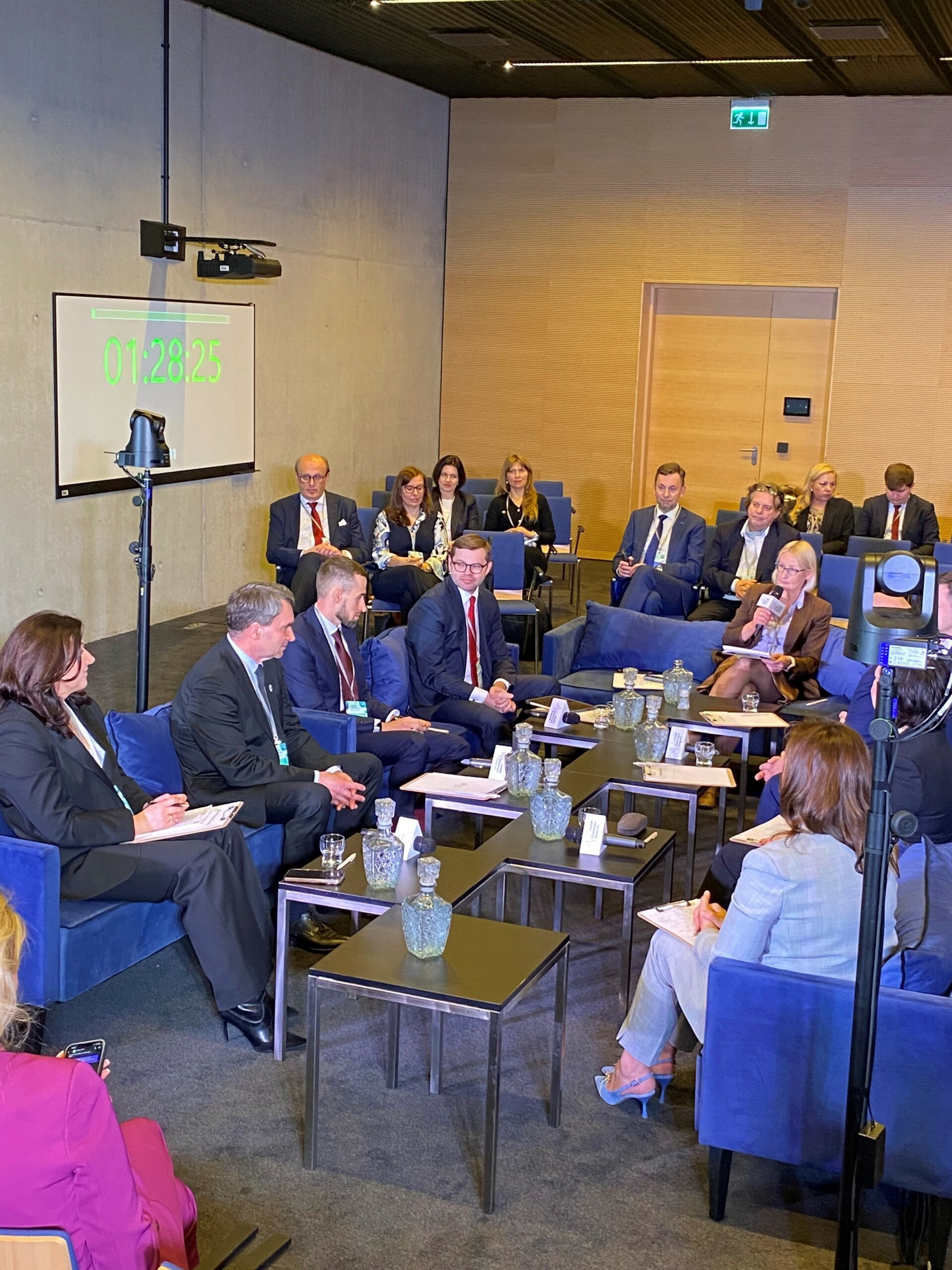
This year’s Congress focused largely on the issue of security, in line with the leading theme of Poland’s Presidency of the European Union. What medicine security means in practice for healthcare systems, and the role played by local pharmaceutical manufacturers, was discussed during a dedicated panel session. Among the speakers was Aneta Grzegorzewska, Director of Corporate and External Relations at Gedeon Richter Polska and a Board Member of the Polish Chamber of Commerce “Farmacja Polska”. Thanks to this involvement, Gedeon Richter was one of the industry voices that resonated most strongly in the debate on medicine security in Poland and across Europe.
Medicine security is not an abstract concept
Medicine security is fast becoming one of Europe’s most critical priorities, alongside energy and defence security. The reason is simple: it concerns the availability of medicines that people rely on every day, both in pharmacies and in hospitals. Aneta Grzegorzewska emphasised that medicine security, understood as ensuring uninterrupted access to essential medicines, is now the third pillar of Europe’s stability. “This is not an abstract idea. It is about making sure that patients can obtain the medicines they need at their local pharmacy. Nothing more – and nothing less”, she noted.
The COVID-19 pandemic and the war in Ukraine have clearly demonstrated how easily supply chains can be disrupted, particularly when a large share of medicine production and key components, including active pharmaceutical ingredients (APIs), is concentrated in Asia. As a result, Europe must now rebuild its strategic autonomy in the field of healthcare.
The Critical Medicines Act: a first step, but not far enough
On 11 March, the European Commission presented the long-awaited draft of the Critical Medicines Act. The document sets out directions aimed at strengthening medicine security within the European Union. While its publication is an important step forward, as Aneta Grzegorzewska pointed out, it still lacks a concrete financial mechanism that would enable real investment in new manufacturing facilities and the development of pharmaceutical infrastructure.
“The industry was expecting the creation of a dedicated fund to support investment in the production of critical medicines. Without such a mechanism, it is difficult to speak of a real breakthrough”, she commented. The draft Act does not provide for a new, additional fund dedicated to medicine security, instead relying on the redistribution of existing EU resources, while highlighting the role of Member States and their national budgets.
Gedeon Richter takes action: we do not stand idly by
The Congress made it clear that responsibility for the EU’s medicine security also lies directly with pharmaceutical companies themselves, particularly those with manufacturing operations in Europe. Gedeon Richter is one of the few European companies with its own production facilities, manufacturing both finished medicines and active pharmaceutical ingredients for key products in its portfolio. In recent years, the Group has also been investing heavily in the development of biotechnology facilities across Europe, with the aim of improving access to medicines for European patients. In Poland, Gedeon Richter is expanding its manufacturing site in Grodzisk Mazowiecki. This investment is being financed entirely from the company’s own resources.
“We are waiting for the symbolic first spade in the ground [from the EU and national budgets – editor’s comment]”, said Aneta Grzegorzewska, referring to the anticipated public support for investment in the development of critical medicine production in Poland.
Challenge: low profitability and excessive regulation
One of the key challenges highlighted by the Gedeon Richter representative is the high cost of production in Europe combined with low margins, which particularly affect manufacturers of generic medicines. “Price erosion in medicines, while beneficial from the payer’s perspective, may discourage companies from investing in production. And we are talking about medicines that save lives”, she stressed.
She also drew attention to the issue of excessive regulation. One example is the so-called wastewater directive, which could significantly increase production costs in Europe and push pharmaceutical manufacturing outside the EU. Poland has already challenged the directive before the Court of Justice of the European Union, a move that we, as domestic medicine manufacturers, fully support.
Gedeon Richter is one of Poland’s key local pharmaceutical manufacturers, including producers of reimbursed medicines. For this reason, we want to actively contribute to solutions that ensure safe and reliable access to therapies for patients in Poland. Our position is clear: medicine security is a shared responsibility of patients, governments and companies such as ours. This is why we take part in events such as the Health Challenges Congress, which create space for constructive dialogue among the key stakeholders of the Polish healthcare system.
13/02/2026
13/02/2026
13/02/2026